
Case study · Branding · UX/UI · React
Versi Bionics
Versi Bionics, a team in Kyiv, makes bionic hand prostheses. My team built their brand from scratch, and I built the website in React: one long page where the hand shows what it can do as you scroll.
The client
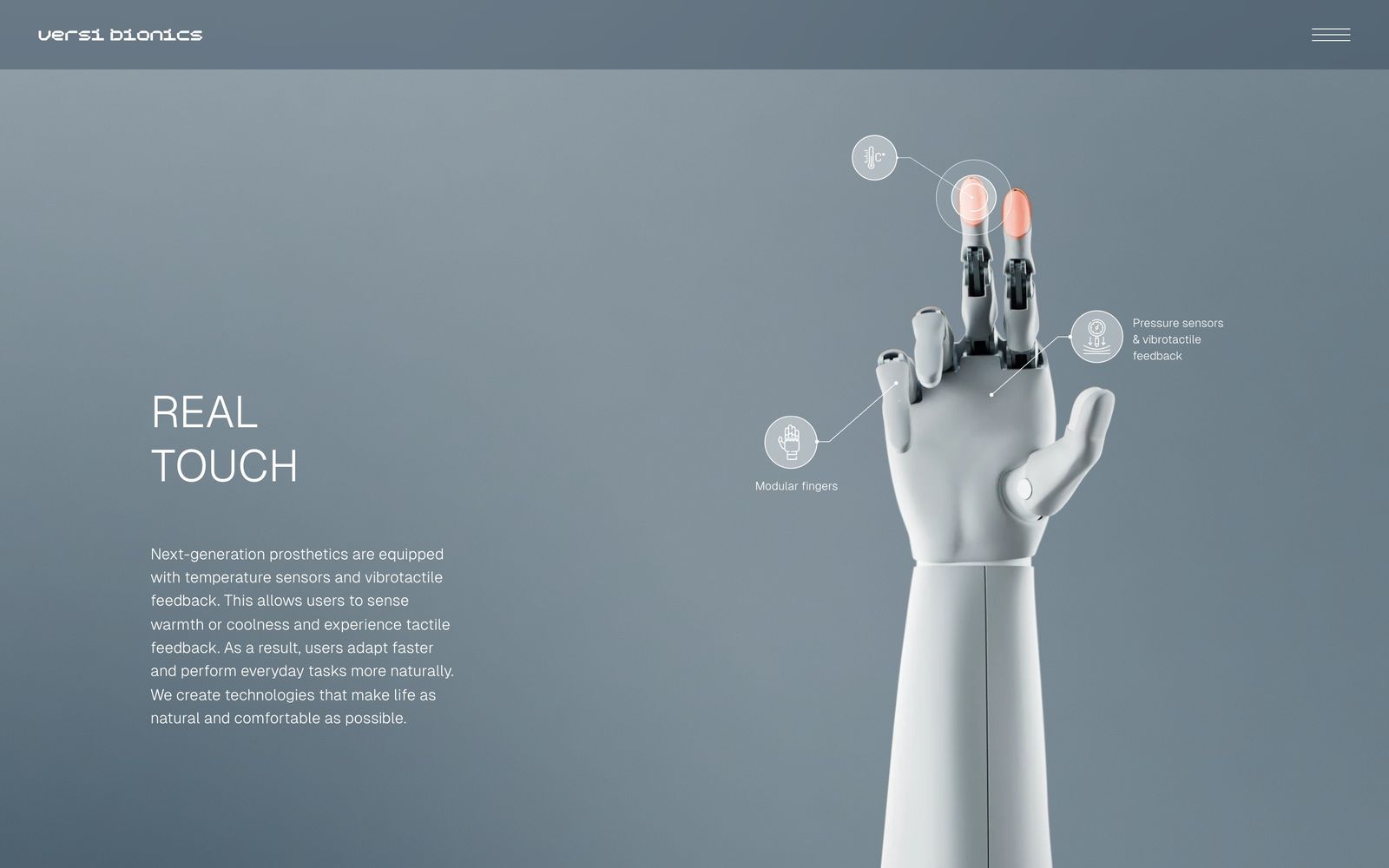
Versi Bionics is a Ukrainian team based in Kyiv. They design bionic hand prostheses and make them in Ukraine. The hand has pressure sensors with vibration feedback, it can sense warmth and cold, and its AI adapts to the way each person moves.
The brief
The company had an old website and a logo that someone had put together in a hurry. The product is serious, and the brand didn't look it. They came to us for a strong brand and a website that makes people want to take a closer look at the hand.
What we did
The brand
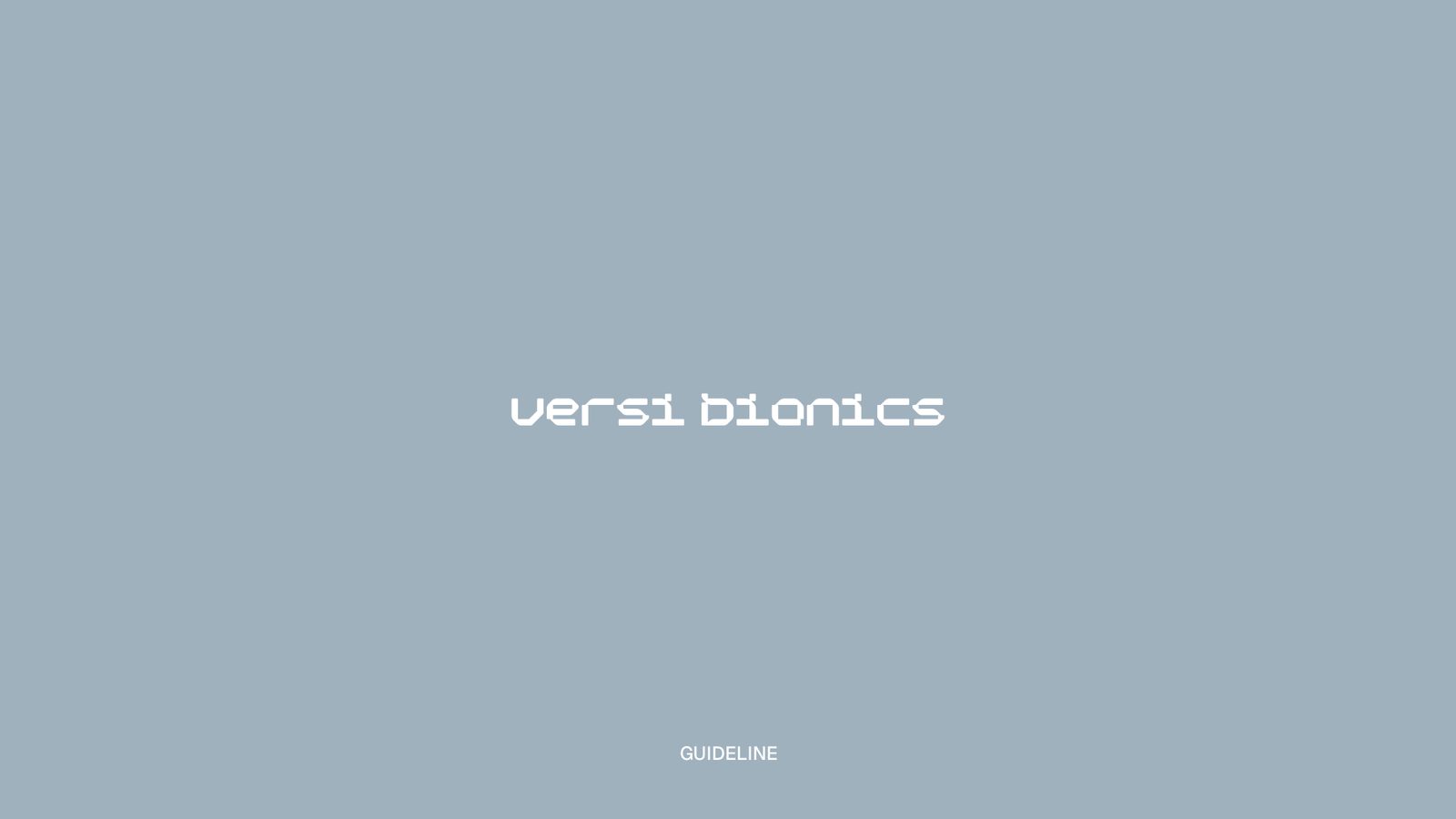
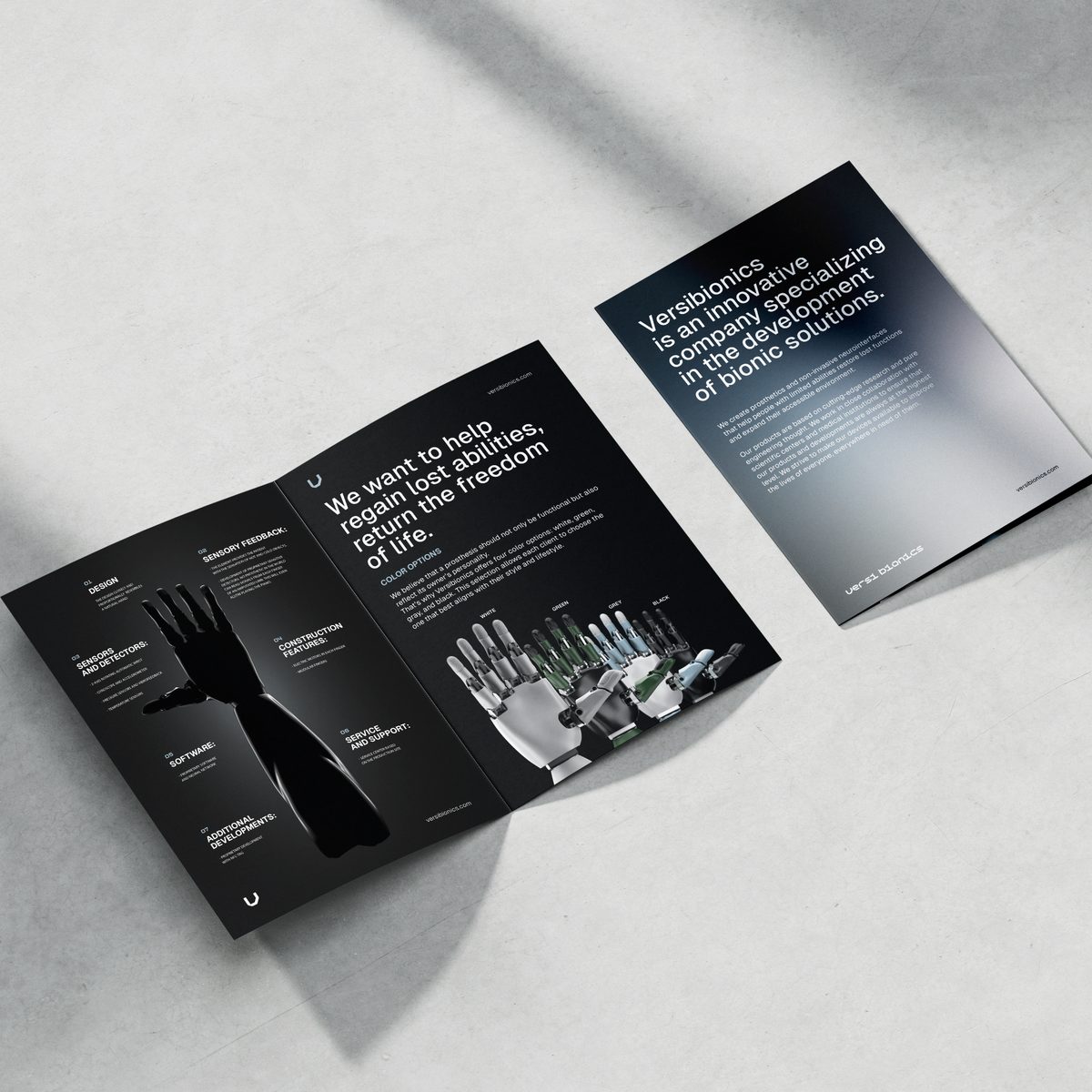
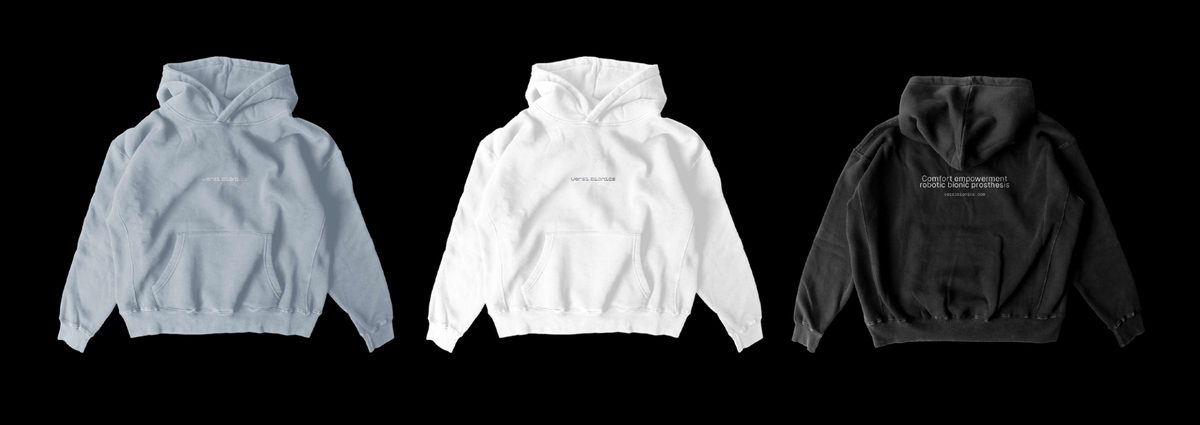
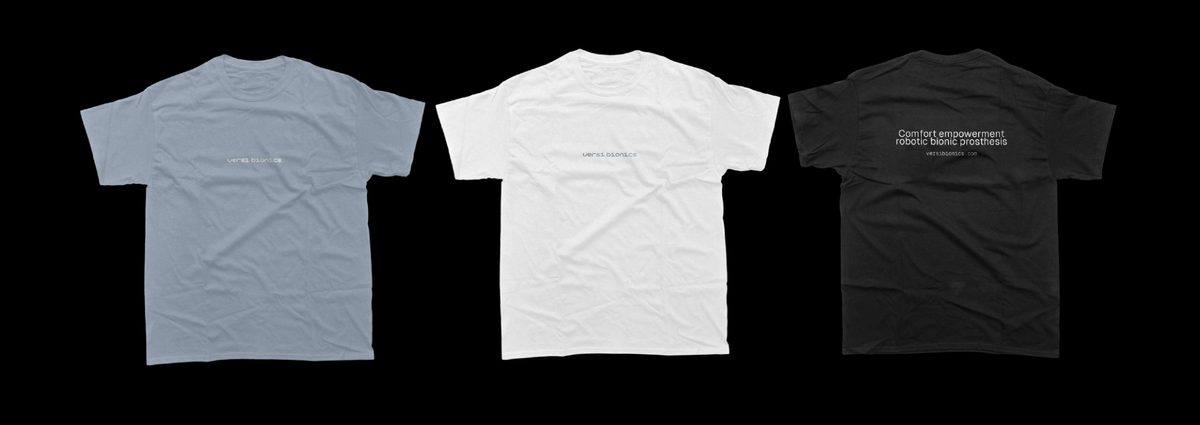
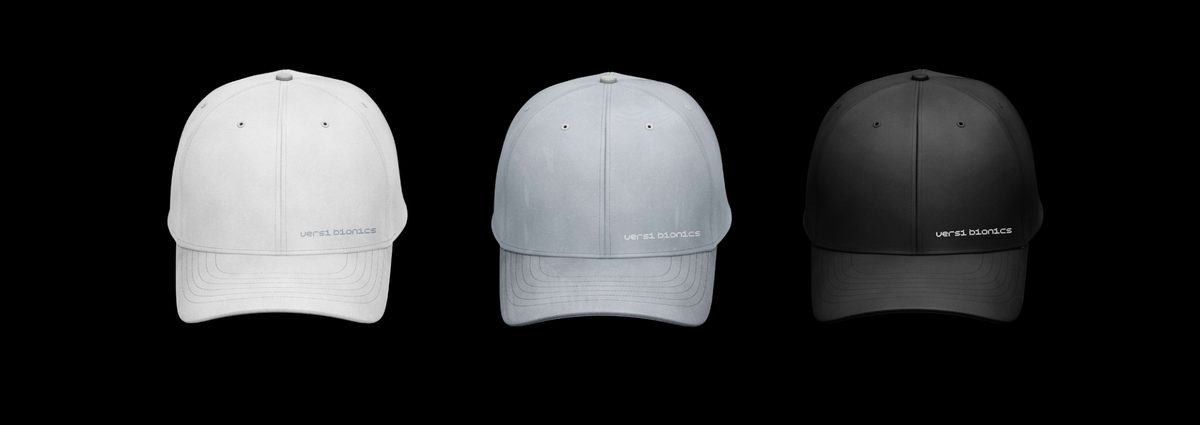
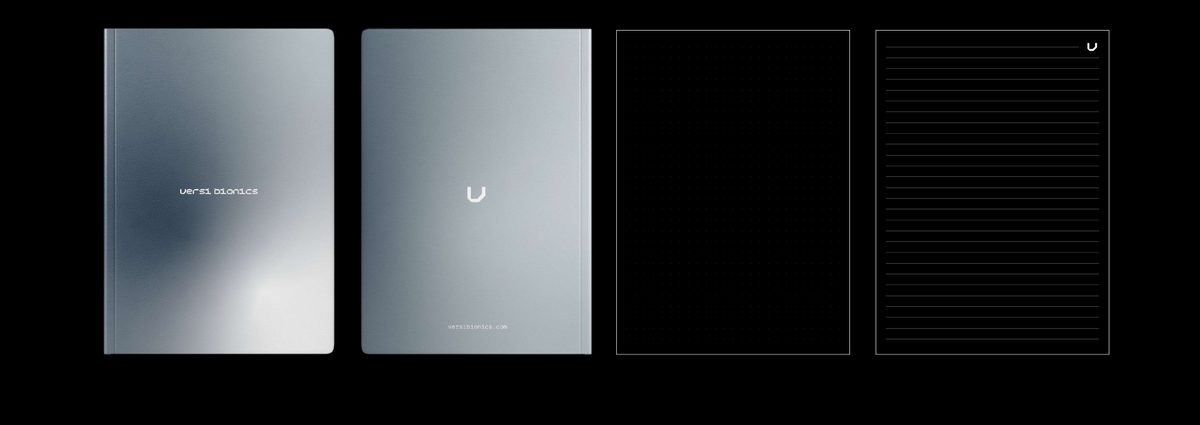
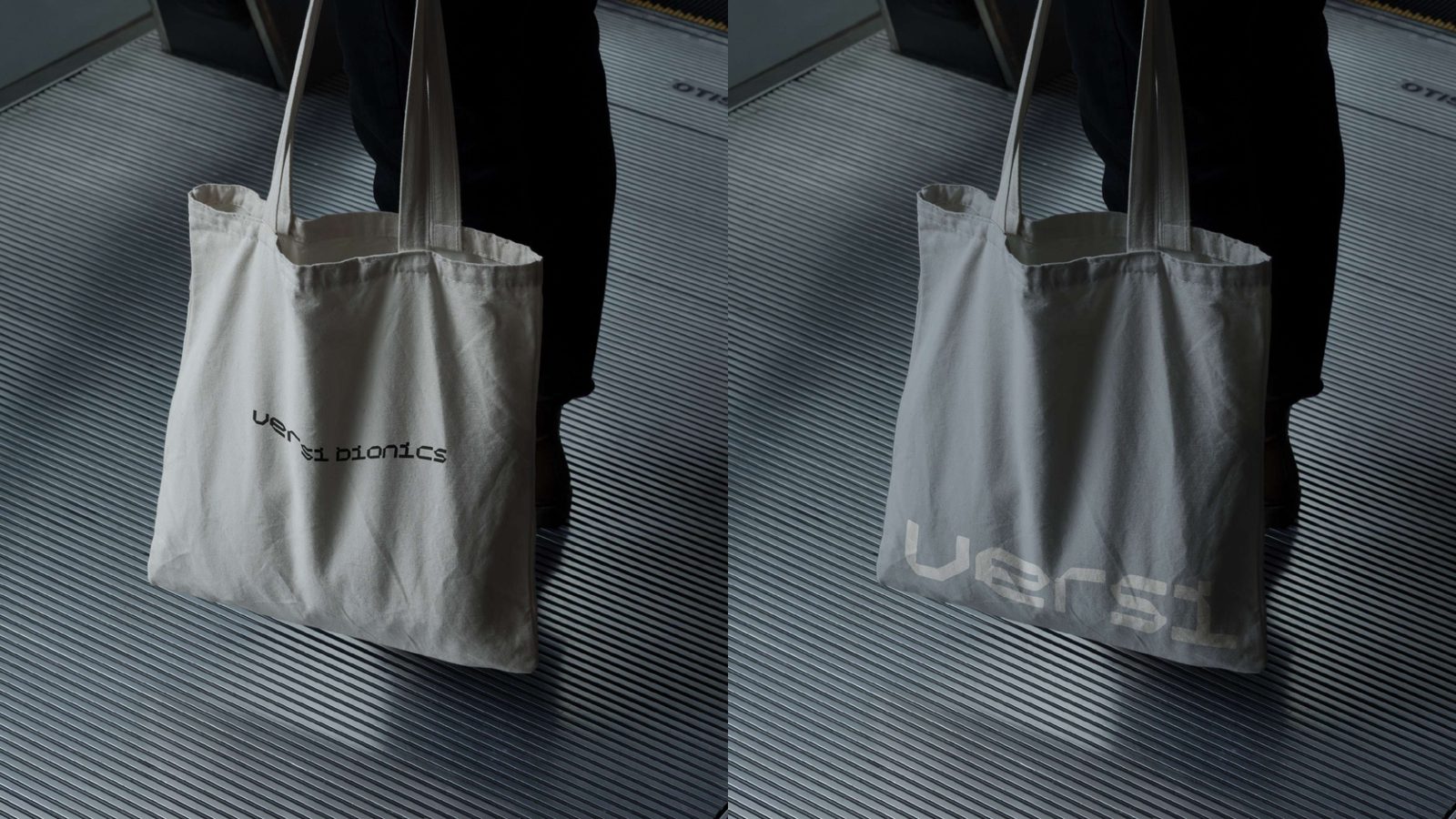
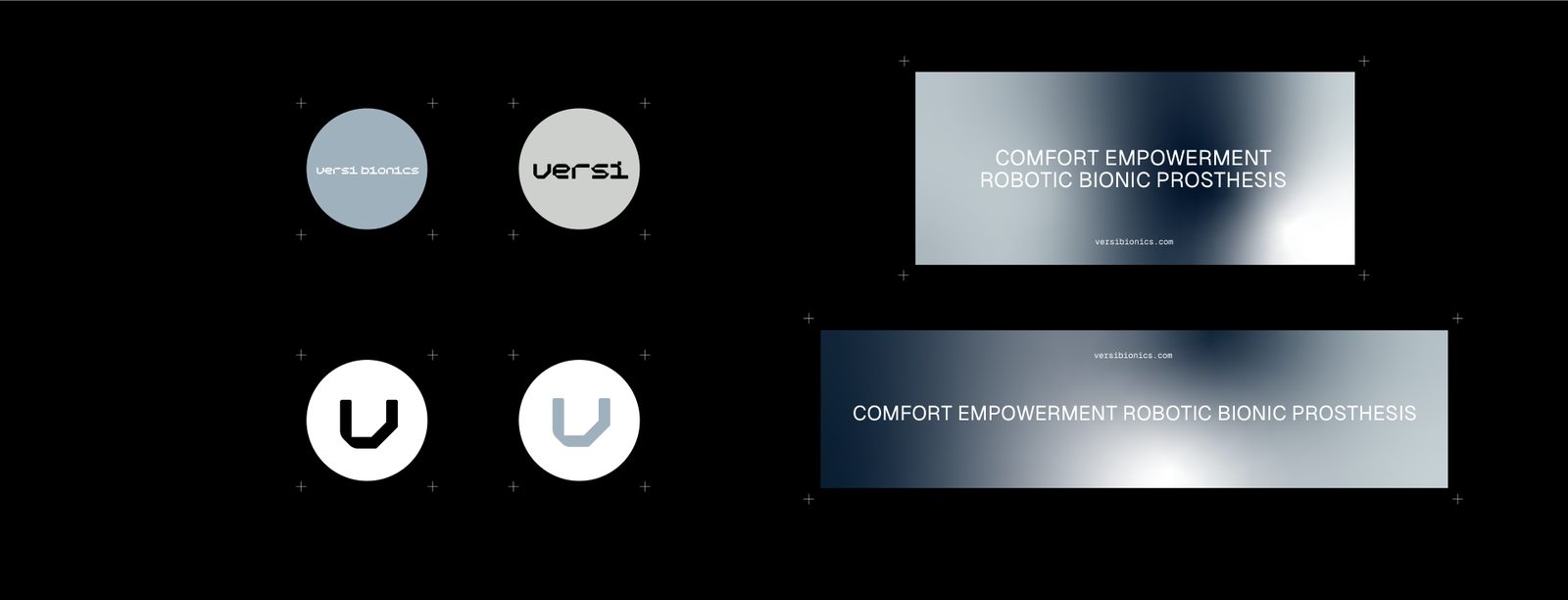
The brand designer on my team built the identity from scratch: the logo, colours, typefaces and brand guidelines, and then carried the brand over to merch. The logo is custom lettering of the name. There is also a short version, "versi", and a V mark taken from the logo for small spaces like avatars.
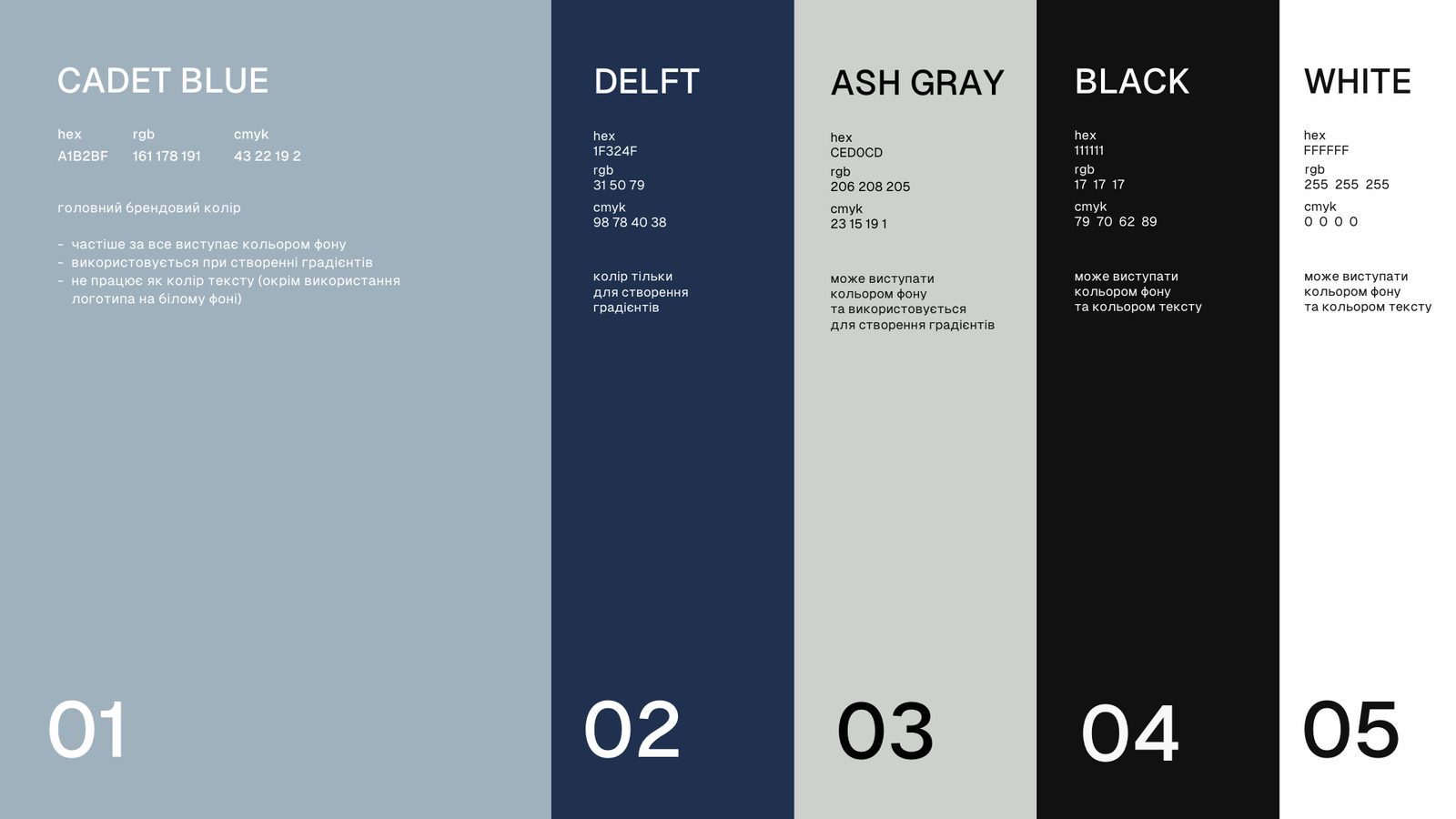
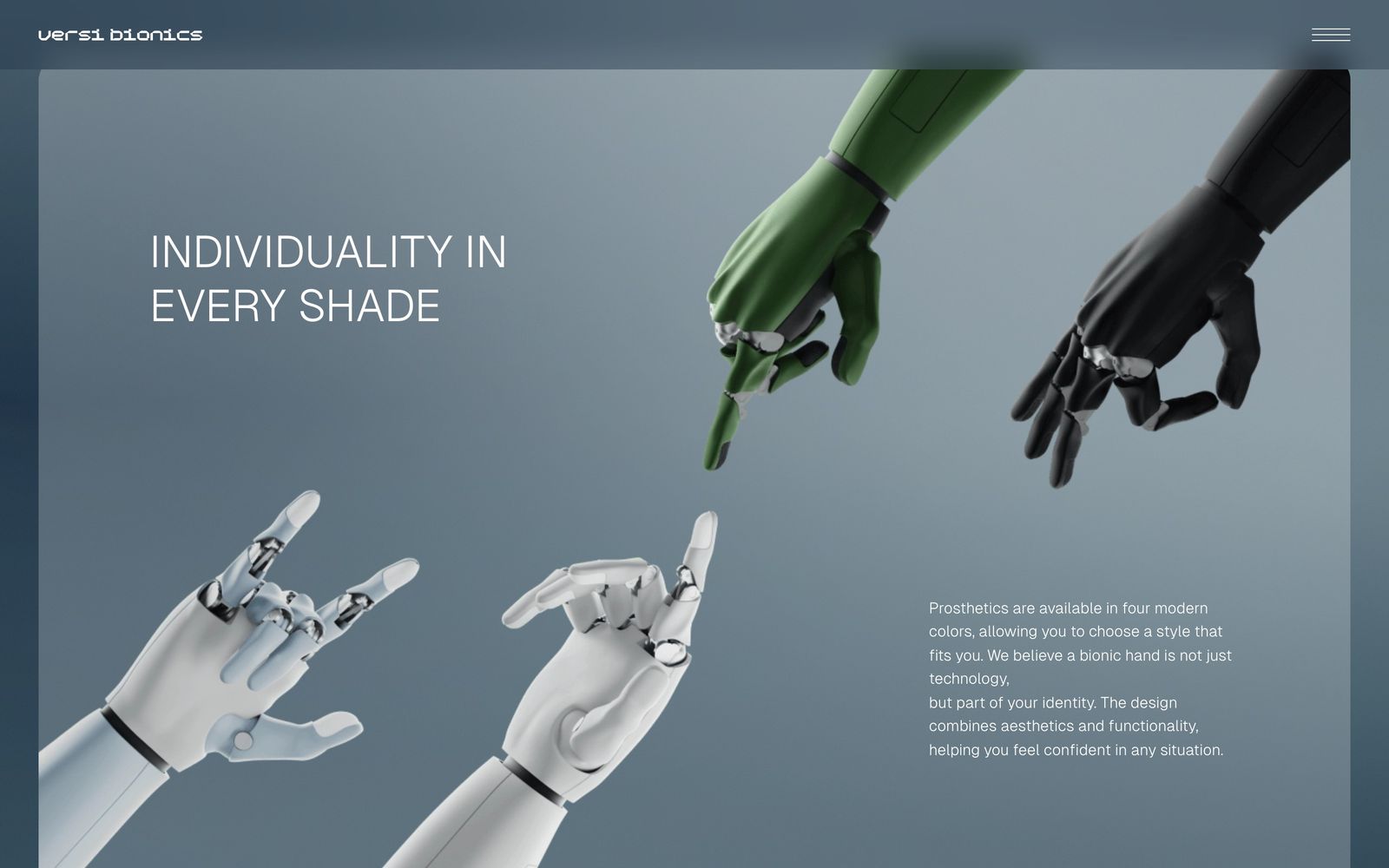
The palette is a cool grey-blue, like the metal of the hand. Dark Delft blue only ever appears inside gradients, and the gradients carry most of the covers, print and merch.

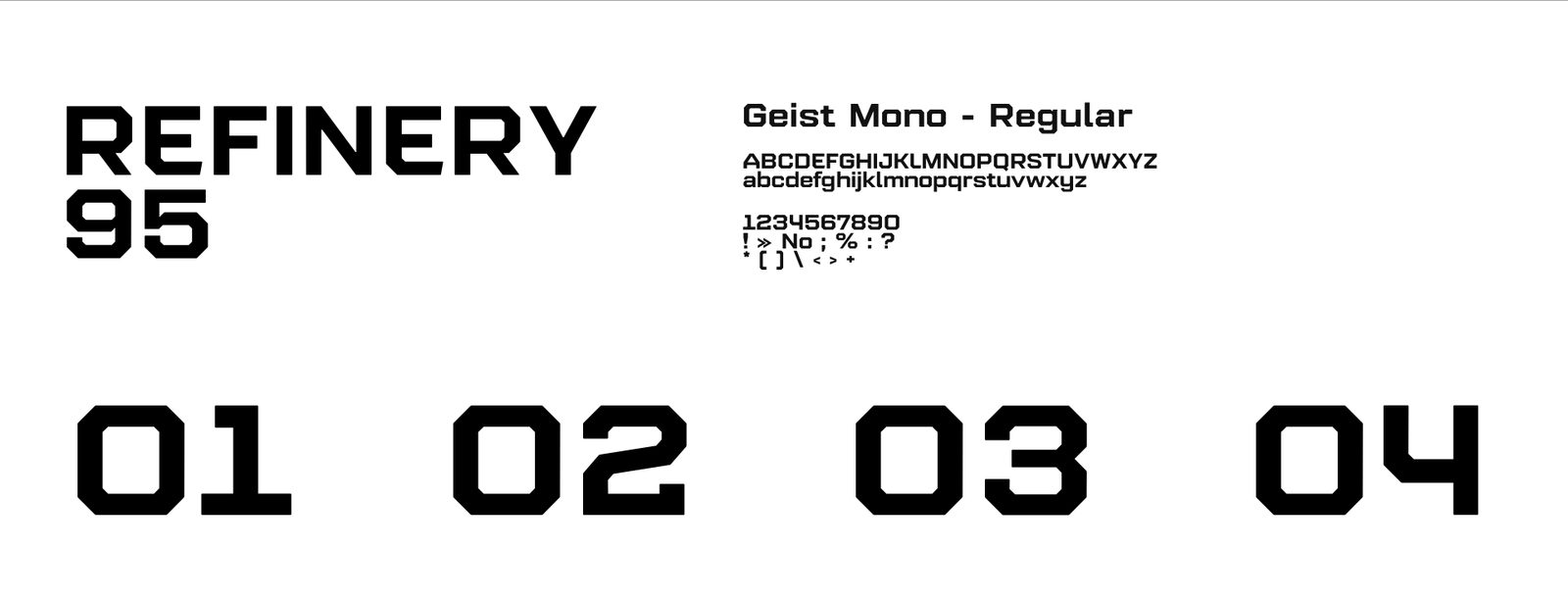
Text is set in Geist and Geist Mono. Numbers and accents use Refinery 95.

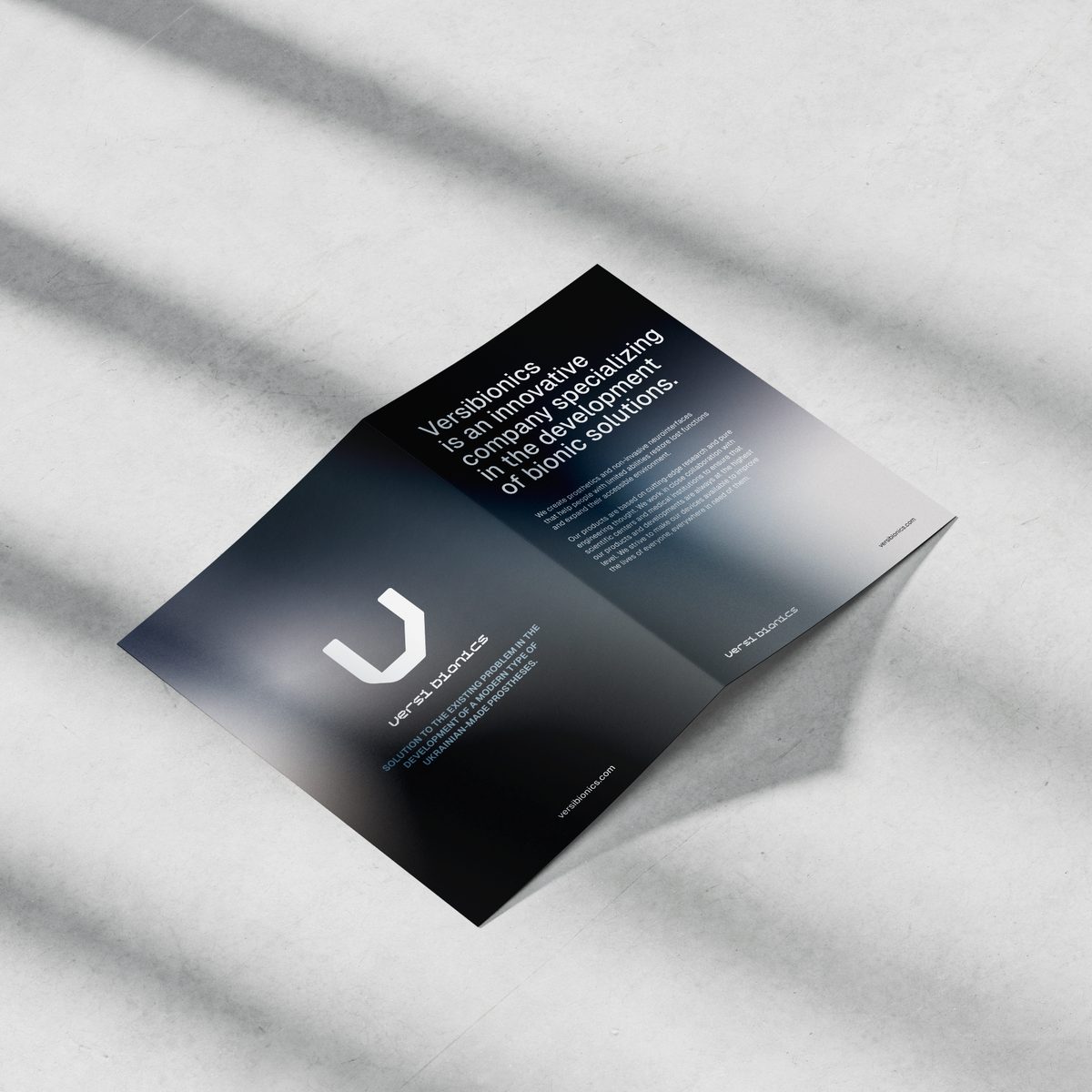
The guidelines show how to use the brand on social media, business cards, a booklet and merch.
UX/UI
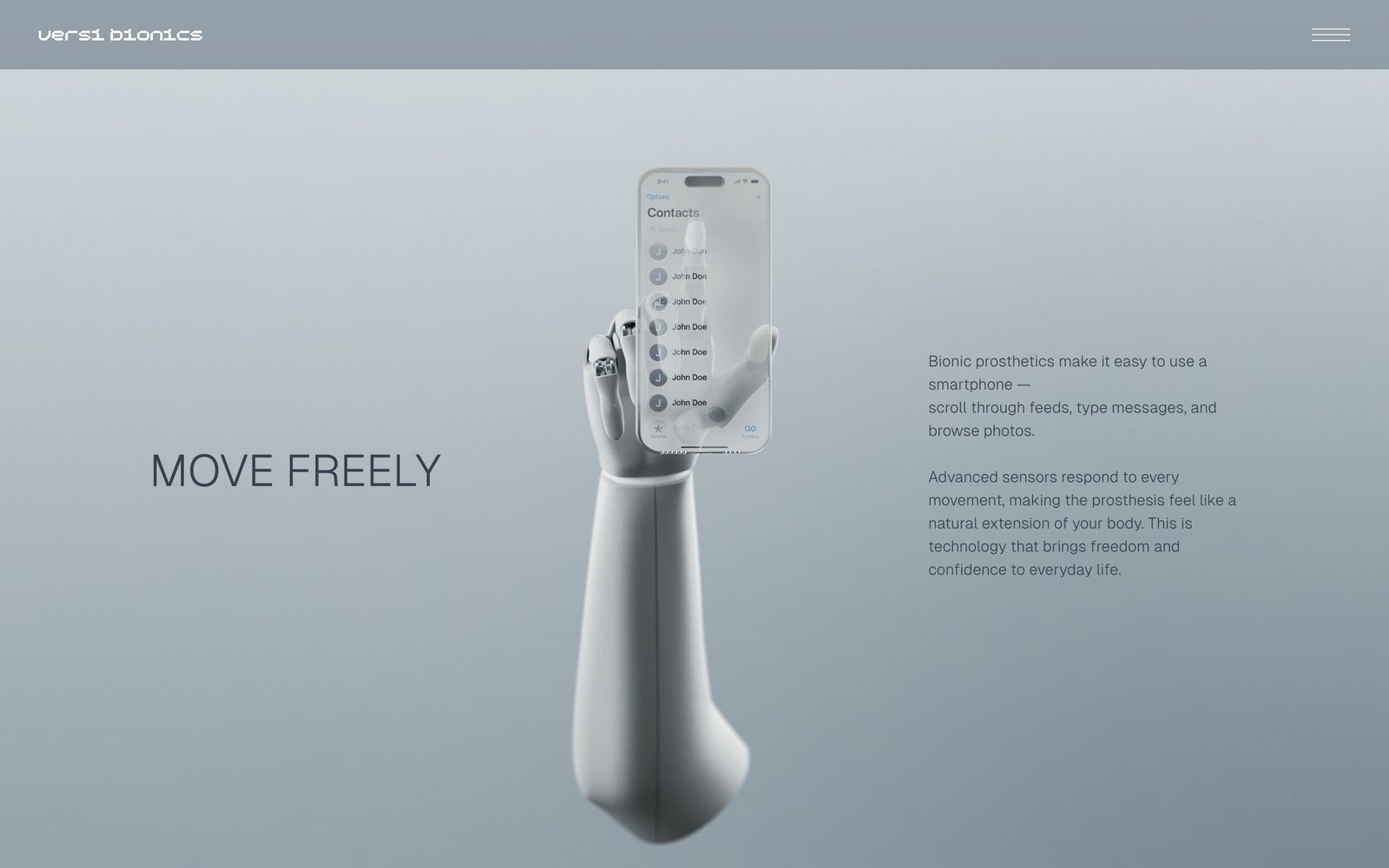
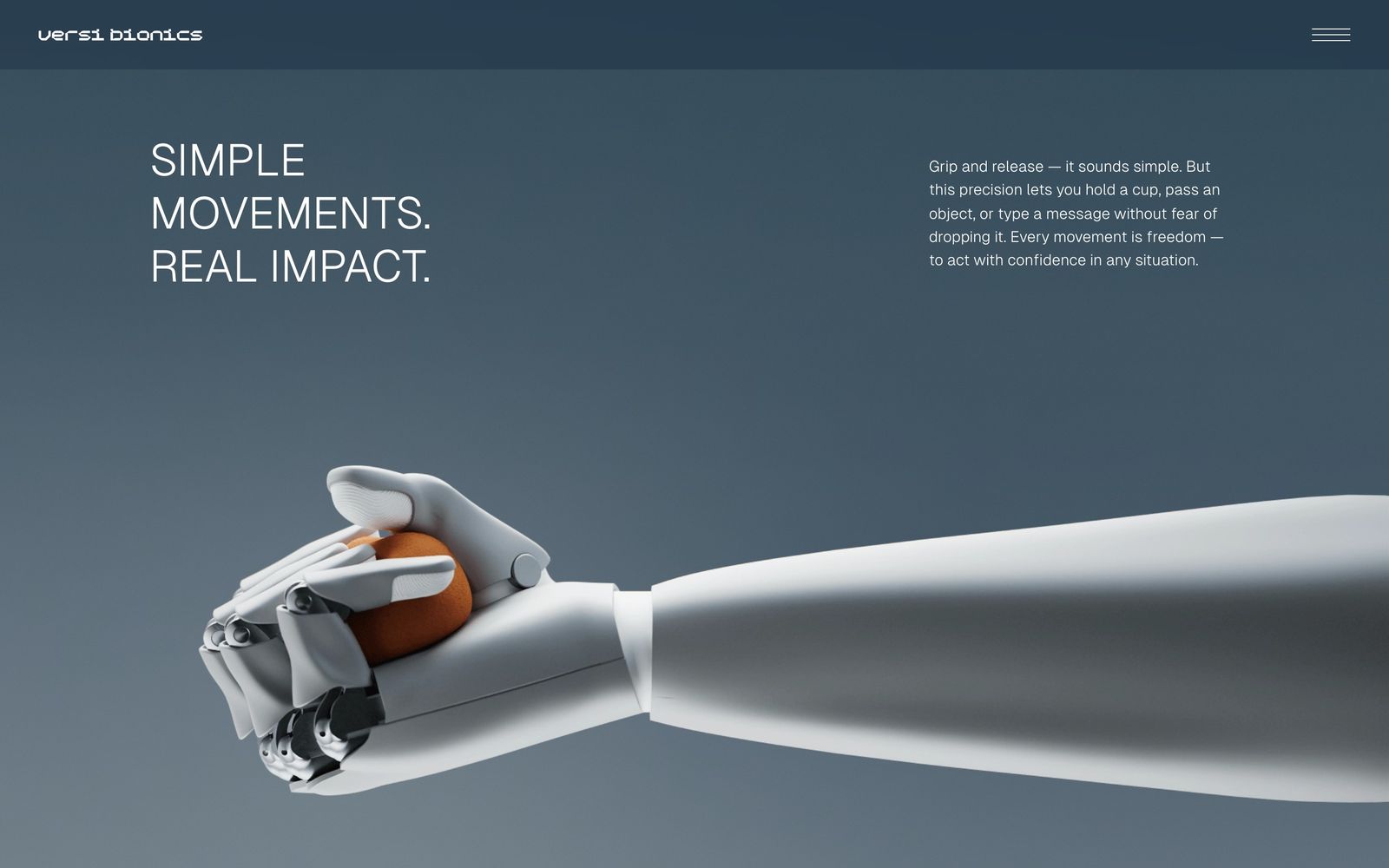
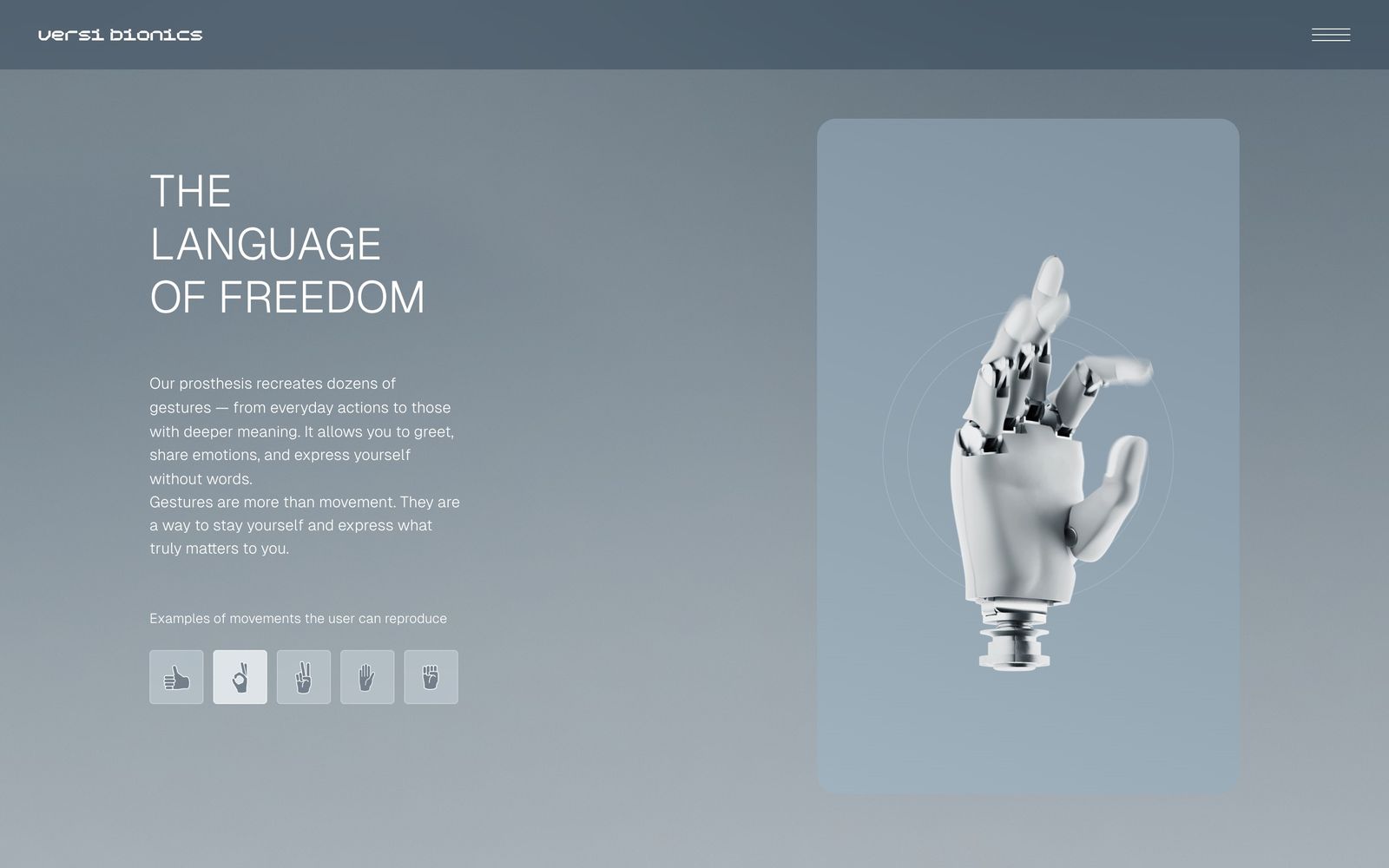
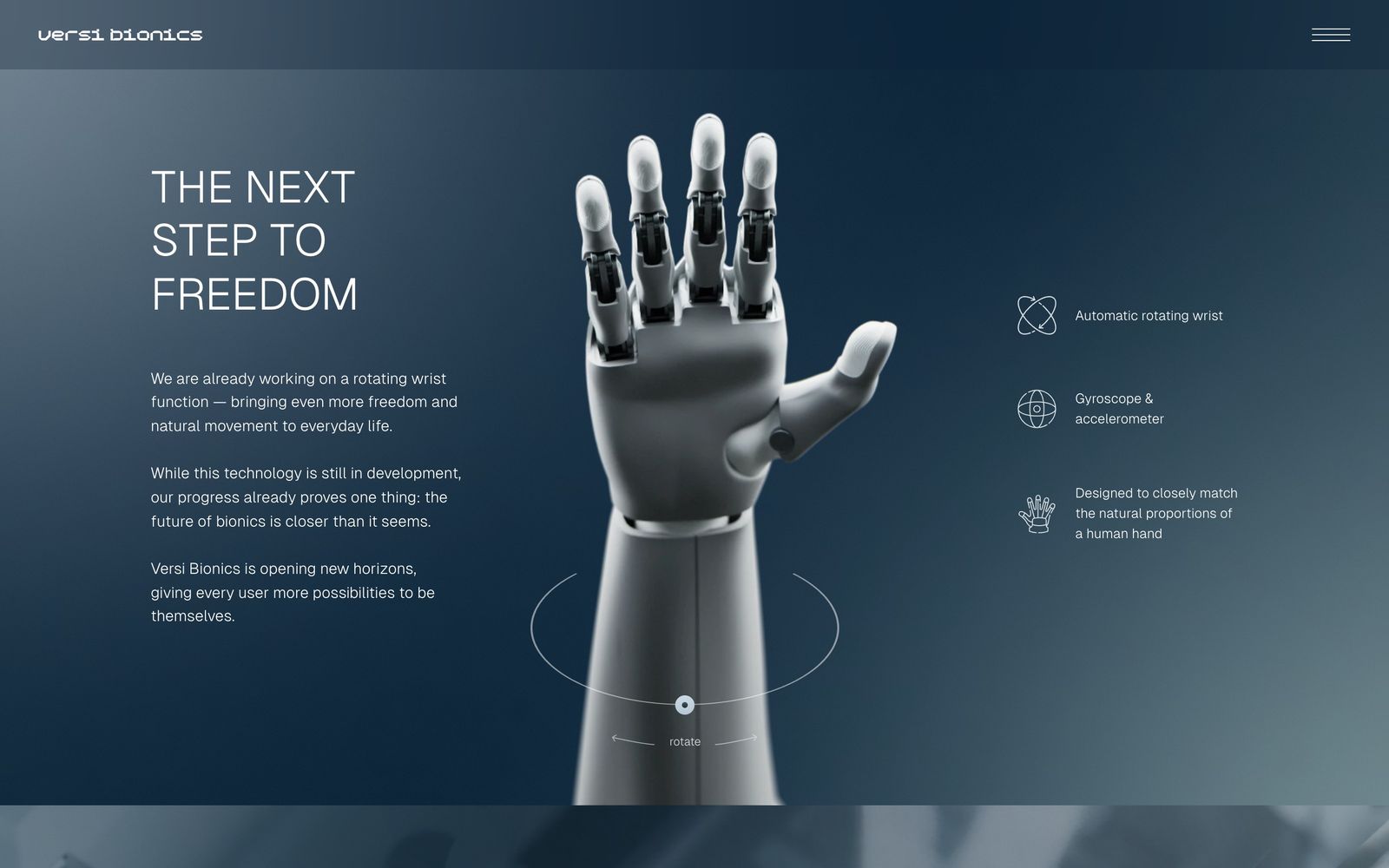
We designed the site in Figma as one long page that tells the story of the hand step by step. It starts with moving freely and holding a phone, goes through touch and temperature, colours, everyday grip and gestures, then the rotating wrist and the AI. It ends with the team and a contact form.
The form at the end splits requests into business enquiries and custom orders from the start.
Development
I built the whole site in React with Next.js. The client gave us a 3D model and renders of the hand, and I turned them into animation that follows the scroll. Each scene is a sequence of rendered frames that plays as you move down the page, and one scene runs as a video. Phones get their own set of frames for every scene, so they don't download the desktop ones. The site is in Ukrainian by default, with an English version at /en, and it runs on the client's server.
Outcome
The site went live in 2025. We handed it over to the client, and their team runs it now.